

Silver Fodder
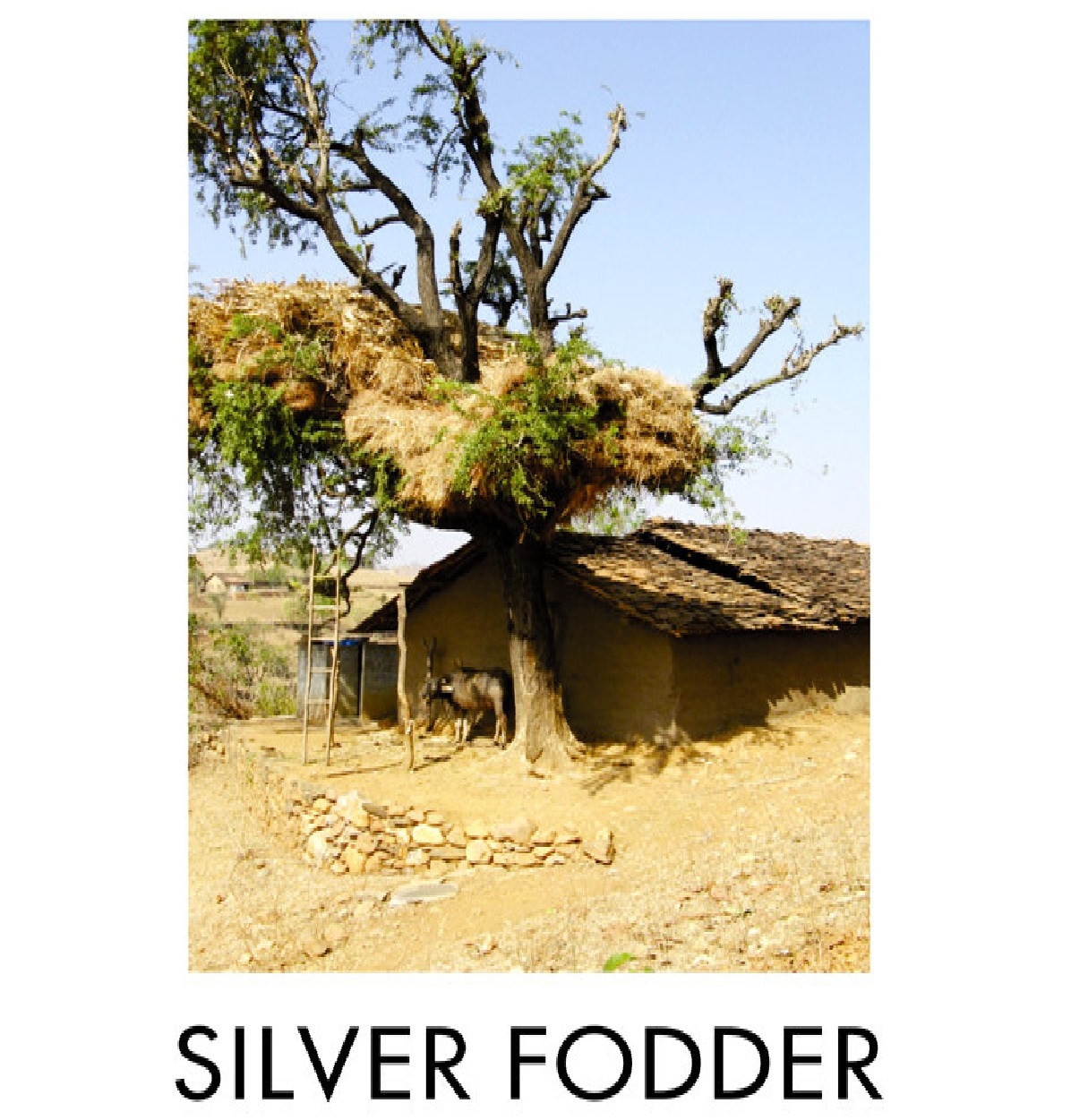
Published jointly by Seva Mandir and the Umed Mal Lodha Trust, Silver Fodder is more than a book-it's a personal and political journey that explores what it means to be a grassroots leader in one of India's most challenging rural landscapes.
Authored by Firouz Ardalan, a foreign volunteer with no prior experience in rural development or fluency in Hindi, the book unfolds as both a documentation of remarkable community leaders and a candid self-reflection. What began as a six-month volunteer assignment evolved into a two-year exploration of resilience, justice, and the human capacity for change.
At the heart of Silver Fodder are the stories of individuals recognized with the Umed Mal Lodha Award, which honors outstanding work in the fields of natural resource protection and community development. While these leaders share common traits-vision, courage, and a sense of service-what makes them compelling are their differences. Firouz sets out to discover not just what makes a leader, but what distinguishes one from another, especially in the context of deep marginalization.
Initially tasked with writing about grassroots leadership, Firouz quickly realized the limitations he faced-he couldn't speak the language, and he was unfamiliar with the cultural and social realities of rural Rajasthan. But instead of backing away, he leaned into his vulnerability. His sense of isolation became a lens through which he could relate to the systemic exclusion many rural people face daily. His writing bridges not only distances of language and geography, but also those of class, privilege, and lived experience.
The book is written in the first person, with Firouz acknowledging his own doubts, discomforts, and missteps along the way. This honest, self-aware narrative becomes a space not only to learn about rural leaders, but also to reflect on the role of the outsider in development work. Rather than presenting polished portraits of heroism, the book grapples with hard questions: What drives people facing poverty and uncertainty to act for the common good?
Why do some resist corruption, even when survival is at stake? And how does one challenge systems of injustice from within?
Fieldwork was far from easy. Relying entirely on translators-like Monika Deol and Arun Poojary-Firouz navigated linguistic barriers, local dialects, monsoon roads, and the everyday unpredictability of rural life. He also came face to face with his own limitations, learning to replace assumptions with listening, and ambition with patience. Despite the difficulties, what shines through the book is a deep admiration for the communities and individuals he encountered.
What emerges is a nuanced, grounded portrait of leadership-not as a status or skill, but as a way of being. Leadership, the book suggests, is often quiet, deeply rooted in relationships, and as much about collective transformation as personal conviction. The individuals profiled in Silver Fodder are not celebrities or politicians; they are everyday heroes who challenge injustice, protect natural resources, and foster community harmony-often without recognition.
Firouz writes with humility, curiosity, and genuine affection. His narrative will resonate with anyone who has ever felt like an outsider trying to make sense of complex realities-and with anyone who believes that even the smallest acts of courage can help shape a more just world.
Silver Fodder is a tribute to these unsung leaders and to the shared values of Seva Mandir and the Umed Mal Lodha Trust. It invites us to listen more deeply, to look beyond the surface, and to believe in the power of ordinary people to lead extraordinary change.