

The Waste Land
What does it take to turn a barren landscape into a thriving community space?
How do ordinary people become changemakers in their villages?
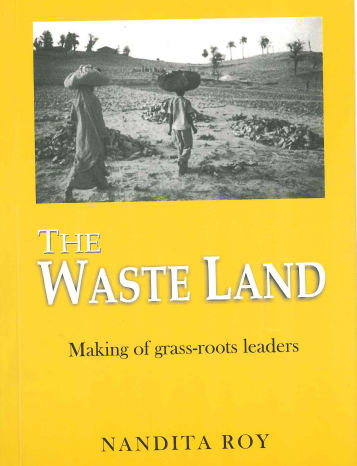
The Waste Land - Making of Grass-roots Leaders by Nandita Roy offers a powerful and moving answer to these questions through real stories of leadership, courage, and collective action in rural Rajasthan.
Published in collaboration with Seva Mandir and the National Foundation for India, this book profiles inspiring individuals and community groups from the Udaipur and Rajsamand districts, who have taken responsibility for transforming their surroundings. Their work spans environmental protection, land restoration, education, and social equity.
Two Parts, Many Voices. The book is divided into two parts. The first part focuses on individual leaders such as Shivlal, Susheela Devi, and Himmat Shrimali-people who, despite facing personal and societal challenges, stepped up to lead. Their initiatives include afforestation, watershed development, and advocacy for social justice. Each story showcases how their leadership began with small but meaningful steps, like organizing a village meeting or starting an adult literacy program, and evolved into larger community-driven efforts.
The second part turns to collective action, featuring groups like the Van Uthan Sangh, Selu Committee, and the Kasya Group. These communities came together to protect common lands from encroachment, restore degraded natural resources, and bridge social divisions such as caste. Their stories demonstrate how collective efforts can overcome deeply rooted challenges and build stronger, more cohesive communities.
A central thread throughout the book is the pivotal role played by Seva Mandir, a grassroots NGO working in southern Rajasthan since 1969. Over the decades, Seva Mandir has initiated various programs that support local communities, including adult education, afforestation, the formation of self-help groups, and the establishment of participatory village institutions. Beyond these efforts, what stands out is the organization's commitment to nurturing grassroots leadership-offering training, guidance, and opportunities for people to take ownership of their development journey and reclaim their rights.
The leaders and groups profiled in this book have often operated in difficult environments. Many have faced resistance from entrenched power structures, threats from those encroaching on community land, and the burden of personal and financial sacrifices. Yet, despite these challenges, they continued to persevere. Their stories reflect not just success, but deep resilience, practical wisdom, and an unwavering commitment to the well-being of their communities.
At UML Trust, we believe that real and lasting change begins at the grassroots. The Waste Land is a celebration of the unsung heroes of rural Rajasthan-many of whom have been honoured with the U. M. Lodha Award for their outstanding work in community development. These stories are more than just inspiring; they offer valuable insights into how sustainable development and social justice can be achieved through local leadership.
This book stands as a tribute to leadership born from the soil, shaped by lived experience, and driven by a vision for a better future. It is both a resource for development practitioners and a reminder to all of us that meaningful change often begins with ordinary individuals taking extraordinary steps.
We invite you to explore these stories, reflect on their meaning, and join us in recognizing the incredible power of community-led transformation.