

Being Earth
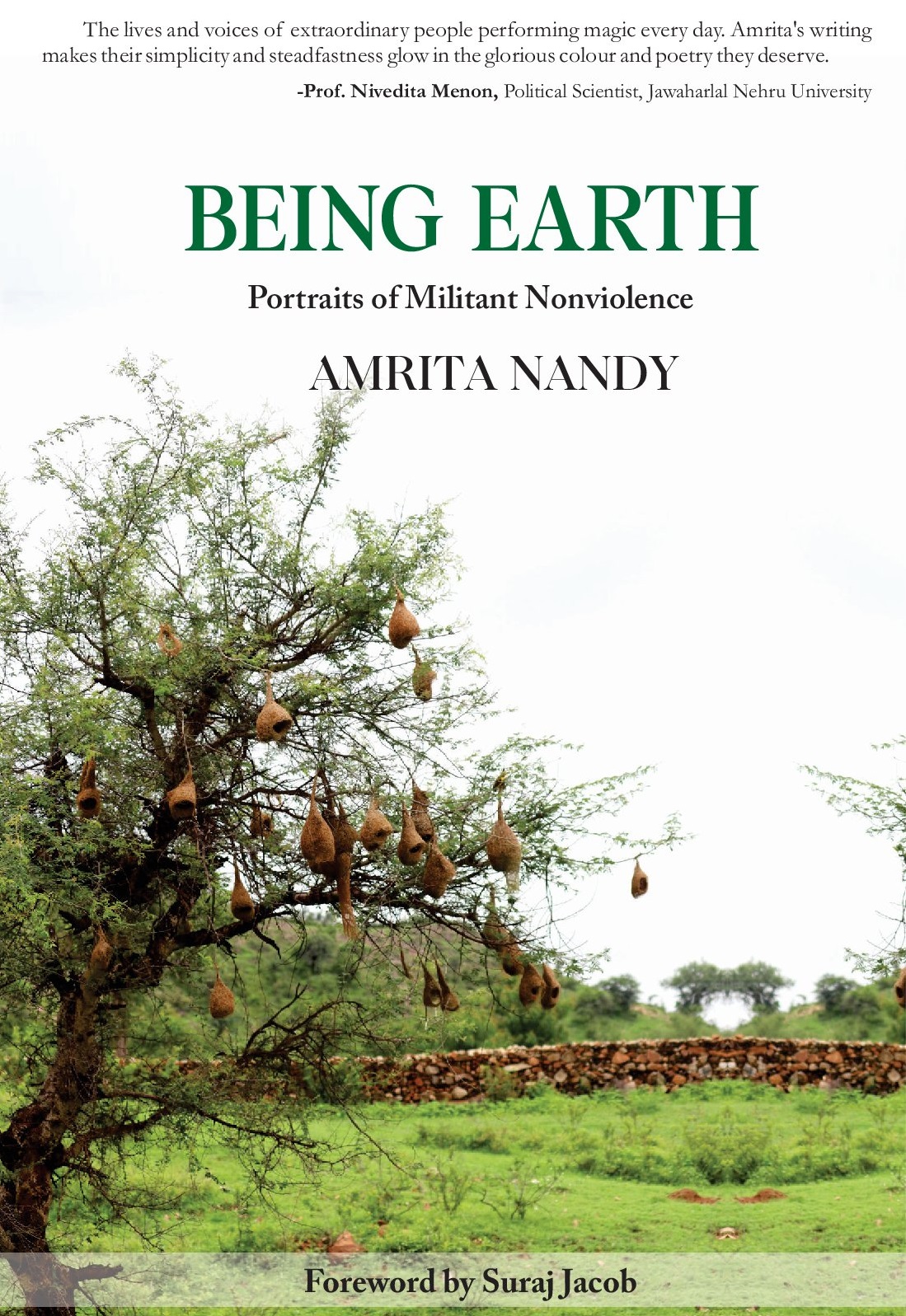
"In forgotten corners of rural India, quiet heroes are redefining what it means to live with dignity, conscience, and courage."
What happens when ordinary people take an extraordinary stand for their land, forests, and communities? Being Earth: Portraits of Militant Nonviolence is a powerful collection of ten such stories-each a quiet revolution led by villagers in southern Rajasthan.
Written by Amrita Nandy and published by Seva Mandir, this book brings us closer to grassroots leaders who blend personal integrity, community spirit, and deep ecological wisdom. Each portrait reveals how leadership can emerge from lived struggle and quiet courage. These are not large-scale campaigns or high-profile movements. Instead, they are stories of slow, steady transformation-fueled by conscience, nonviolence, and collective action.
What sets these stories apart is their deep rootedness in community and local ecology. These individuals worked not only for their communities but with them. They fought to protect common lands and forests, not with confrontation, but with dialogue, patience, and ethical conviction. This is what the book calls "militant nonviolence"-an unshakable commitment to peaceful change, even in the face of apathy, resistance, or threats.
Many of these journeys began through Seva Mandir's programs-adult literacy classes, village meetings, or forest conservation efforts. What followed was personal transformation: a shift from passivity to active citizenship, from individual hardship to collective empowerment. For example, leading one of Rajasthan's first campaigns for community forest rights, inspiring thousands to see forests not as state-owned resources, but as shared responsibility.
Importantly, the book shows how community work is as much about inner change as it is about external development. It's about building trust, confronting injustice within and outside the village, and standing up for the commons in a culture that often prizes private gain. Some women leaders challenged not only ecological degradation but also patriarchal norms that confined them to silence.
In contrast to mainstream development models that focus on large-scale infrastructure and external expertise, Being Earth offers an alternative imagination. Here, development is not delivered to people-it is created by them, through everyday acts of care, collaboration, and conscience. The book gently nudges us to rethink what it means to lead, and what it means to belong to the Earth.
Seva Mandir's decades-long work-especially in regenerating forests and protecting the commons-forms the backdrop of these stories. The book is also a tribute to visionaries like Shri Umed Mal Lodha and S.N. Bhise, whose work laid the foundation for participatory forest governance in Rajasthan. The Umed Mal Lodha Memorial Trust, which honours grassroots conservation efforts, finds its spirit beautifully reflected in these pages.
Being Earth reminds us that the path to justice and sustainability may be long and hard-but it is also deeply human, hopeful, and rooted in relationships. These are not just stories of the past. They are blueprints for a different kind of future-one led not by power or profit, but by people who choose to live with dignity, harmony, and responsibility.
We invite you to read Being Earth, and let these stories stir your own conscience.